Senate Bill 151, the bill discussing the elimination of exclusive local zoning laws has passed out of committee and is scheduled on the Senate docket. Although the bill as drafted may not lead to the reform it is looking to spark.
In the bill’s first clause it looks to prevent local ordinances from imposing unrealistic plot minimums and setback requirements that will limit development. The second clause eliminated bans on townhomes in single-family zoning. This policy is where the bill hits its first problem.
The use of the word townhome in our state implies vertical partitions between units, a choice of wording which may be unintended, although will inhibit the bill’s effectiveness greatly. The generally settled approach to densification in single-family neighborhoods is by way of middle housing, or 2–9 unit structures. These structures in places such as Edmonton, Alberta where similar laws have been passed often have the same façades as existing single-family homes, allowing them to blend into the neighborhood. Townhomes on the other hand are a different type of building entirely--and while included in middle housing--are not always the preferred method of multifamily development. In Edmonton the majority of multiunit construction has been on single-family facades rather than vertically separated front entrances like townhomes have. This regulation on the type of multiunit building may limit developers from choosing to build middle housing.
The third clause dictates that existing homes cannot be prevented by local ordinances from subdividing into 3 separate units. This law, perhaps with good intentions, will lack the increased incentives for homeowners and developers to act, leaving our housing supply at its current level. There would need to be surplus returns possible for the existing inertia in the status quo system to change. The limitation to 3 units would constrict the space for profit, and further deregulation to 4-8 units should be considered like was put into place in Edmonton. This combined with an unrealistically low 5000sqft maximum plot limit would cause the bill to provide inadequate results. Making a compromise on the plot limits to the average in Edmonton of ~6500sqft and raising the unit limit to 8 units would increase density in a given area by almost double (see figure 1). Limiting to 6 units over the same square feet would still lead to a significant reduction even as a compromise (see figure 2).
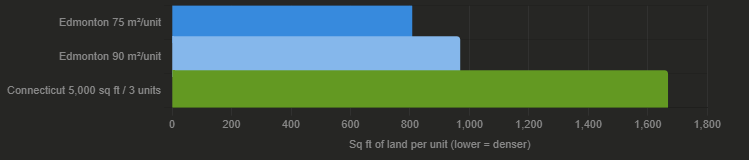
The state’s current proposal provides half the density as other policies
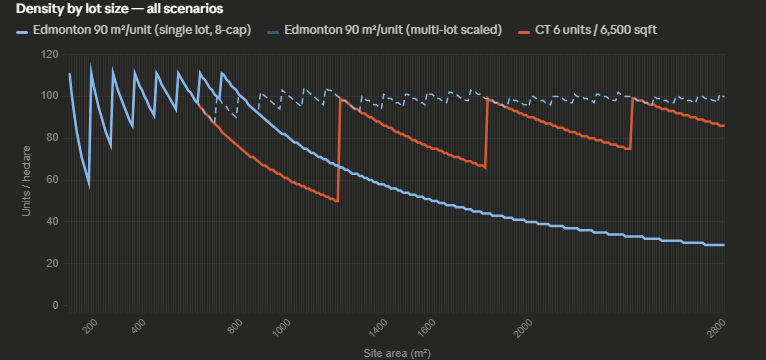
A higher unit count and plot size limit will have the intended effect
This limitation on zoning may not hurt the current housing shortage but it may not improve it as much as is thought. The effectiveness of a bill relies on its weakest link, and this current version lacks the developer incentives to truly change the current state. Edmonton had to pass incredibly developer-friendly laws to spur development, and we should consider doing the same. As basic economic laws tell us, deregulation will lead to development and increased supply. The deadweight loss being carried by excess regulation does not make our state any more affordable.