After hearing the Governor’s State of the State address last week filled to the brim with accomplishments and an outlined vision for the State, we must start to ask about how to accomplish many of these goals. While some legislators insist the economy has flatlined like decades prior, I invite them to look out their windows today, because they would see a state that has long since left that rut behind. Our State sees a future of growth and development although the expansion of our cities is the key method in ensuring it continues.
Transit Oriented Development (TOD) was touted during the governor’s speech as a major accomplishment, and while it may be a solution, we must also have transit around existing neighborhoods. The development around transit is incredibly important, but we still have neighborhoods left behind by our current transit system, creating transit deserts in our urban spaces, which prevents the mobility of our residents and limits our economic growth. If we want to connect people with jobs and commercial spaces with residents, we need to think about how to get them there. Many people in our cities and towns do not want to drive or find it too expensive with maintenance costs and rising expenses in other categories so it is the job of the state to provide an alternative.
CT Transit, the transit division of ConnDOT and bus provider in many of our cities, must go through significant expansion to supply the necessary services to the present and future residents of Connecticut. As a state with a rapidly growing population of younger residents that bring life and energy to our cities and towns, we must cater to their preferences for the future. Younger generations are fast adopters of transit with almost 40% of people under 30 saying convenient public transit was important to them; far more than any of the previous generations. Connecticut must be a state that can look to the future and cater to a younger population as they will soon become the main drivers in our economy, settling in the Nutmeg State to create small businesses and grow their careers.
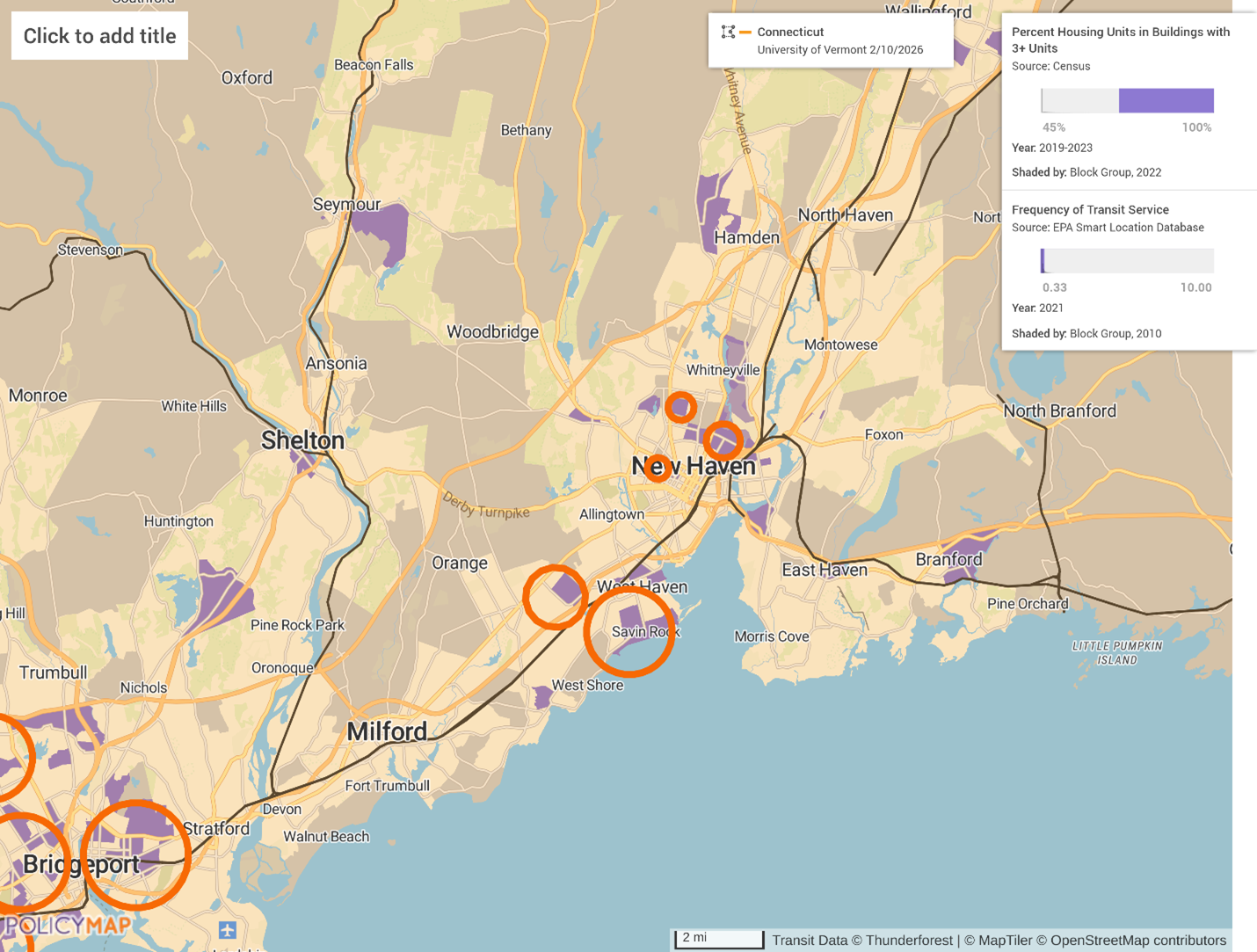
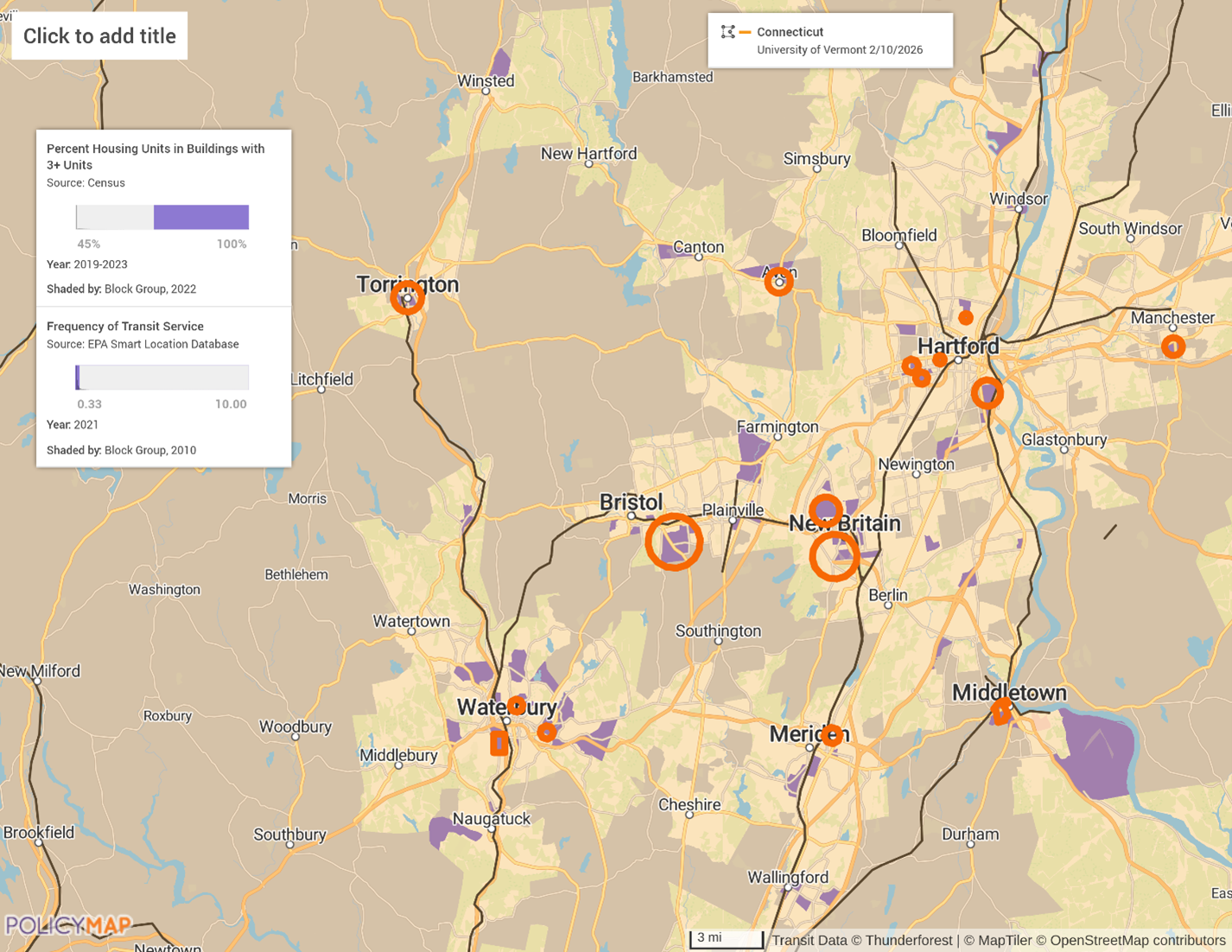
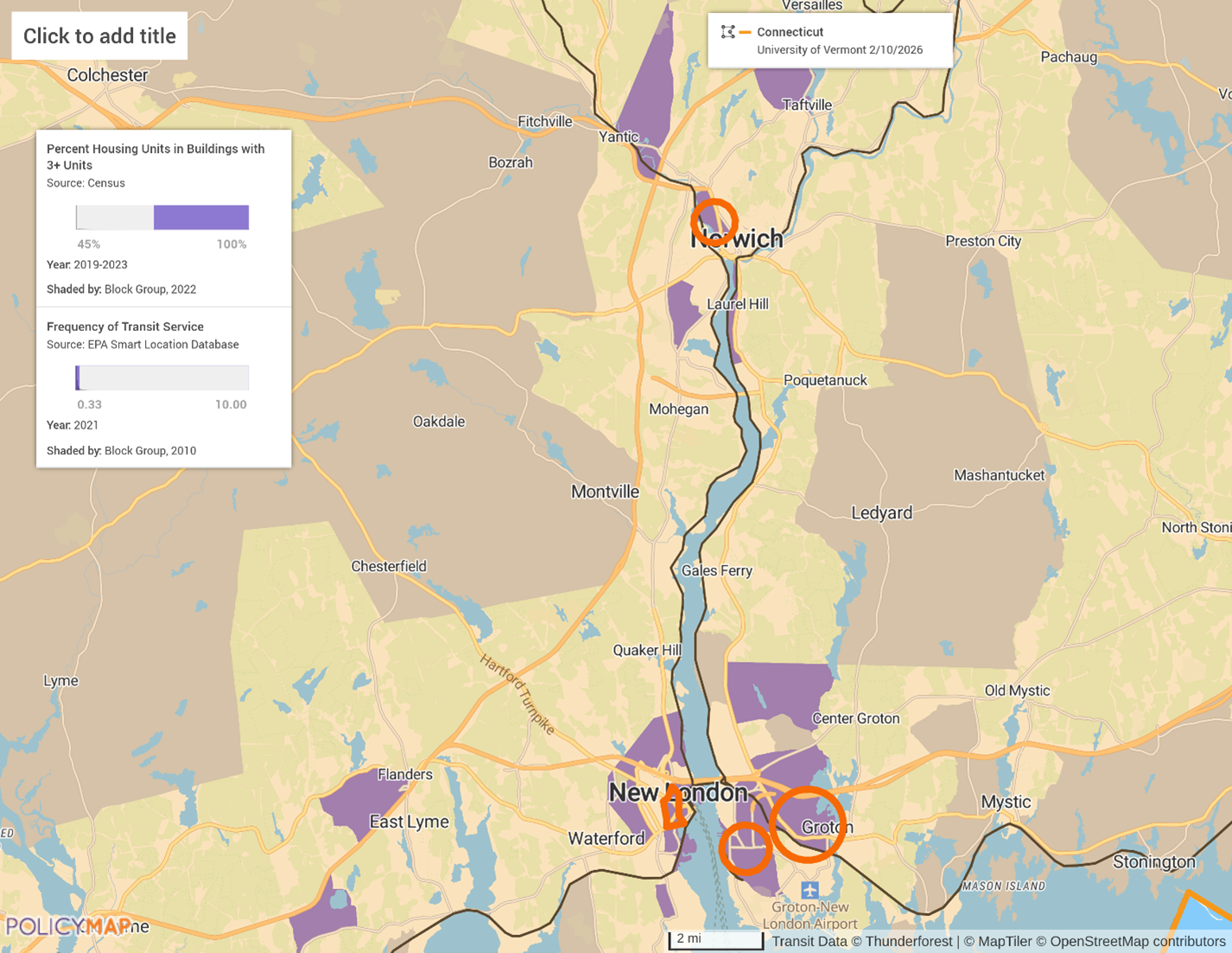
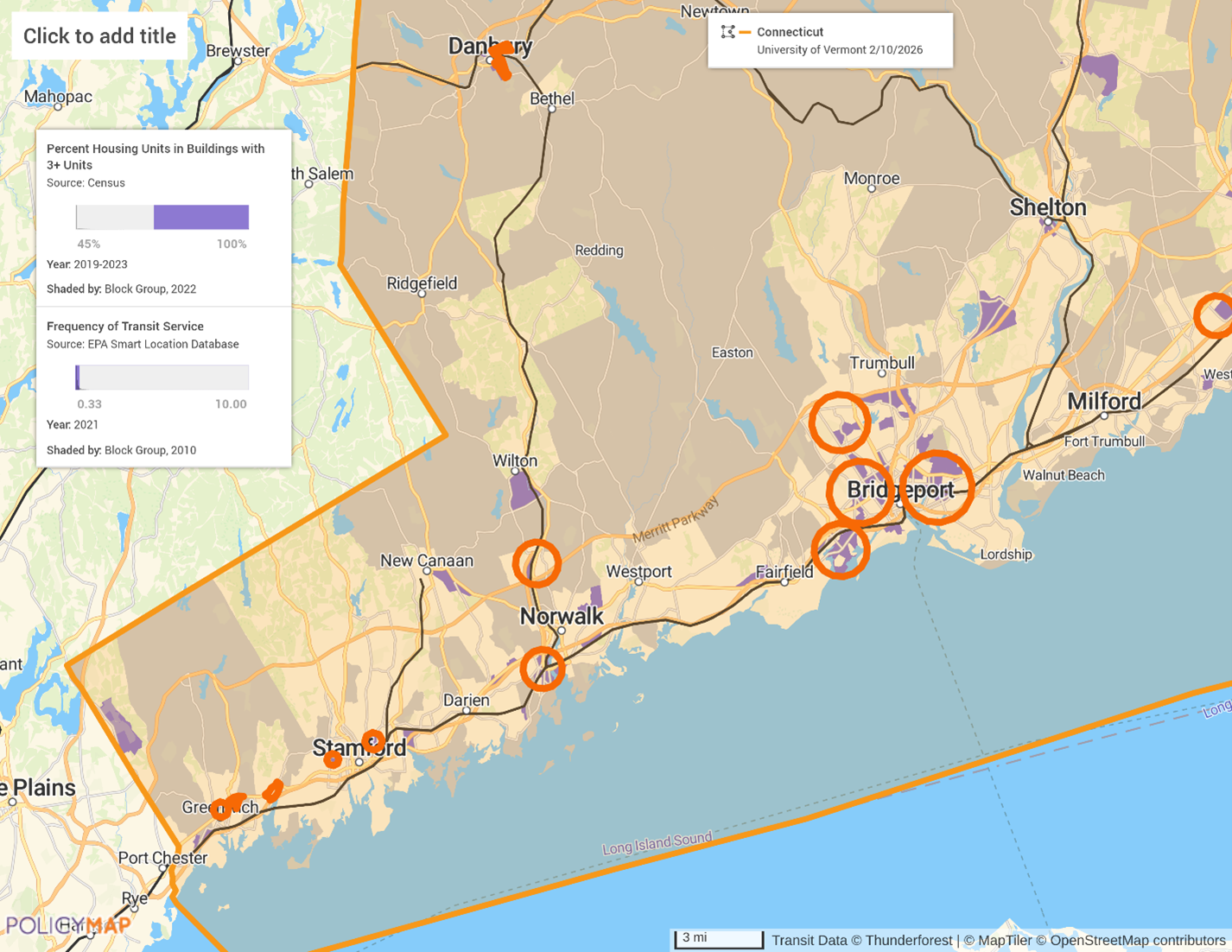
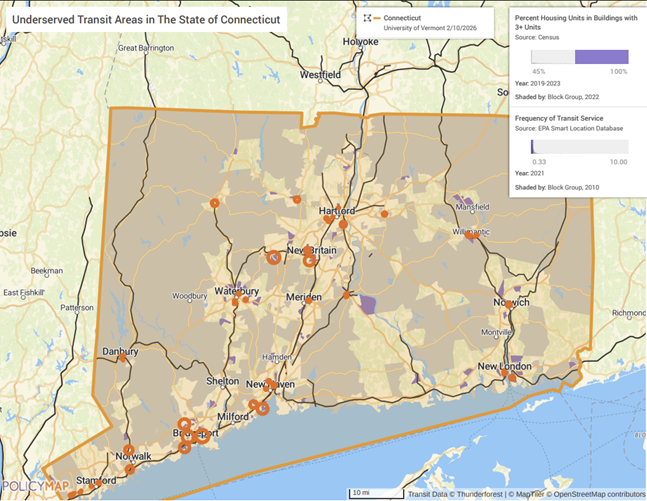
To accomplish this CT Transit must solve their transit deserts and expand well beyond their current scope. As shown in the figure below, which maps high density residential in the state with low transit frequencies to show which locations are underserved. For example, Torrington has a high-density core with over 50 percent of units being labeled multi-unit, although it lacks sufficient transit connections to Hartford. This could bring in a large amount of tourism in the summers and provide an urban escape from the Capitol during the sweltering weekends. Groton and much of New London still lack frequent service across the river, weakening the connection between the sister cities. Similarly, Cos Cob, much of outer Bridgeport, and Stamford’s Glenbrook neighborhood, where weekend service relies on an unreliable looped bus, pose significant barriers for residents traveling sans-auto. The new urban district of New Britain also lacks sufficient service even though it is served by CT Transit’s FastTrak service which only runs from the downtown transit center. Norwich lacks sufficient connection to the mouth of the Thames, and Willimantic would be well serviced by express bus services to and from the Capitol and Norwich. This isn’t to even cover the woes of Shore Line East’s lack of funding despite the cries from residents to restore and expand the service to Mystic and Westerly.
While buses may seem like a last resort for many people, the younger generation lacks the stigma around public transportation. It is time to revamp services. Connecticut could make a massive advertising push around its transportation hubs and ease of access, peeling away residents from nearby states and growing our population and economy in the process. The recent announcement for a BRT system in New Haven is exciting although the study and expansion of local bus routes is important as well, with raising frequencies and adding routes being an easy way to fill a void cheaply without the need for costly infrastructure. There is no reason for a Stamford or Bridgeport resident to wait an hour between buses on the weekends, just like a resident of New London should not be hampered by poor service to cross the river or visit Norwich. Our residents deserve better and we must be able to adapt to the future Connecticut not only the Connecticut we have today.